







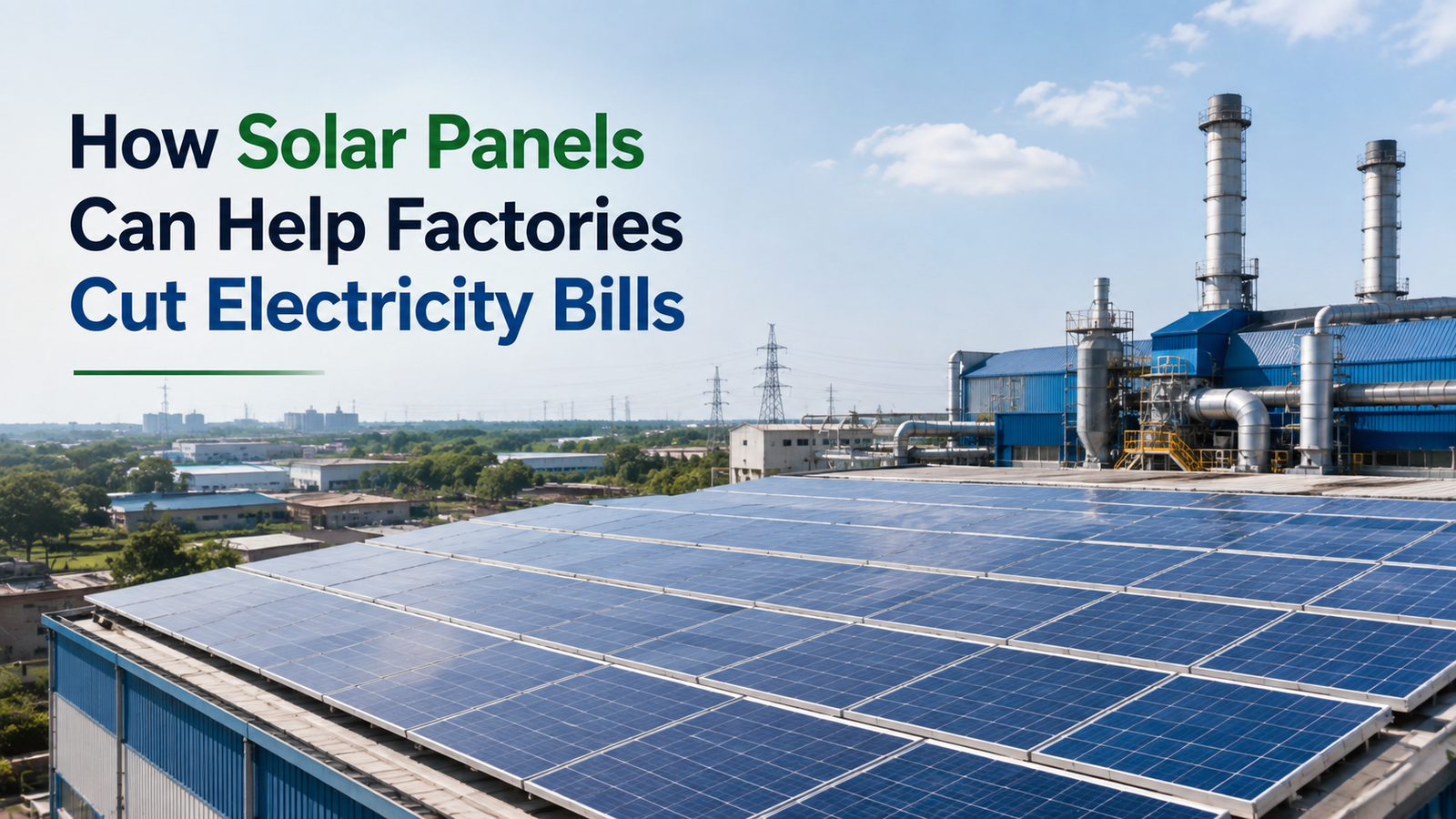
How Solar Panels Can Help Factories Cut Electricity Bills
Electricity is one of the biggest operating expenses for many factories. From running heavy machinery and production lines to powering lighting, cooling systems, pumps, and other equipment, factories consume a large amount of electricity every day.
As energy costs continue to rise, manufacturers are looking for practical ways to control their expenses. This is where industrial solar panels can make a real difference.
By generating electricity from sunlight, factories can reduce their dependence on grid power and potentially lower their monthly electricity bills. With the right system design and professional installation, solar power for factories can become a valuable long-term energy solution.
How Solar Panels Help Factories Reduce Electricity Costs
Factories are often well suited for solar because much of their electricity consumption happens during the daytime, when solar panels are producing power.
A properly designed industrial solar power system can generate electricity for machinery, lighting, ventilation, cooling systems, and other factory operations. This reduces the amount of electricity the facility needs to purchase from the grid.
The benefits can include:
- Lower monthly electricity expenses
- Reduced dependence on grid power
- Better control over energy costs
- Greater use of renewable energy
- Improved long-term energy planning
The actual savings will depend on factors such as electricity consumption, system capacity, available space, tariffs, and applicable regulations.
How Solar Power Works in a Factory
The process is simple.
Solar panels installed on a factory rooftop or suitable ground area capture sunlight and convert it into direct current (DC) electricity. A solar inverter then converts the electricity into alternating current (AC), which can be used by the factory’s electrical equipment.
During daylight hours, the generated solar power can be used directly by the facility.
Depending on the system design and applicable regulations, excess electricity may be exported to the grid or stored in batteries for later use.
This allows factories to make better use of solar energy while reducing their dependence on conventional electricity.
Why Factories Are a Good Fit for Solar
Factories often have high and consistent electricity demand. Many operate during the day, which matches the peak generation period of a solar system.
Solar can be particularly useful for factories with:
- High daytime electricity consumption
- Large rooftops or suitable open land
- Consistent production schedules
- High electricity costs
- Long-term energy-saving goals
For these businesses, installing an industrial solar system can be a practical way to manage energy expenses.
Key Benefits of Solar Panels for Factories
Lower Electricity Bills
The biggest reason factories invest in solar panels for factories is the potential to reduce electricity costs.
When solar power is used directly by the factory, less electricity needs to be purchased from the grid. Over time, this can help reduce operating expenses.
Better Control Over Energy Costs
Changes in electricity tariffs can make long-term energy budgeting difficult.
Generating part of your own electricity through solar can reduce exposure to future increases in grid electricity costs. This gives businesses more control when planning their operating expenses.
Greater Energy Independence
Factories depend on a reliable electricity supply to keep production running.
A solar system can reduce dependence on grid electricity. When combined with suitable battery storage or backup solutions, solar can also support selected critical loads during certain grid interruptions, depending on the system configuration.
Lower Environmental Impact
Factories consume significant amounts of energy, and shifting a portion of that consumption to solar can reduce dependence on conventional power sources.
By adopting solar energy for industrial use, businesses can support their sustainability goals while making renewable energy part of their everyday operations.
Long-Term Investment Value
A solar installation is designed to generate electricity for many years. While the initial investment needs to be considered, long-term electricity savings can make solar an attractive energy investment.
Businesses can also evaluate available financing options and applicable incentives before starting a project.
Low Maintenance
Solar systems generally require limited routine maintenance.
Regular panel cleaning, electrical inspections, performance monitoring, and preventive maintenance can help keep the system operating efficiently over the long term.
Industrial Solar Panels vs. Residential Solar Panels
The basic solar technology is similar, but industrial systems are designed for much larger energy requirements.
A home solar system typically powers appliances, lighting, and other household loads. A factory may need to support heavy machinery, motors, pumps, compressors, production lines, and cooling systems.
Therefore, an industrial solar power system needs to be designed around the factory’s:
- Electricity consumption
- Load profile
- Available rooftop or ground space
- Electrical infrastructure
- Equipment capacity
- Future energy requirements
This makes professional system design especially important for industrial projects.
Integrating Solar with Existing Factory Power
Factories do not need to completely replace their existing electricity supply to use solar.
A grid-connected solar system can operate alongside the existing power infrastructure. Solar electricity can be used when available, while grid power continues to supply the facility when solar generation is insufficient.
Businesses can also consider battery storage when backup power or energy shifting is an important requirement.
A monitoring system can help track:
- Solar energy generation
- Factory electricity consumption
- Grid power usage
- System performance
- Energy savings
This information helps businesses understand how their system is performing and identify potential issues early.
What Should Factories Consider Before Installing Solar?
Choosing a solar system involves more than deciding how many panels to install. A proper assessment helps ensure that the system matches the factory’s actual energy requirements.
Energy Consumption
Review electricity bills and consumption patterns to understand how much power the factory uses and when it uses it.
Available Space
Factory rooftops and unused land can provide valuable installation space. The area should be checked for shading, structural strength, orientation, and accessibility.
Electrical Infrastructure
The existing electrical system should be assessed to determine how the solar installation can be safely connected to the factory’s power network.
Equipment Quality
Solar panels, inverters, mounting structures, cables, protection equipment, and monitoring systems all contribute to the overall performance and reliability of the installation.
Professional Installation
Proper engineering and installation are essential for long-term performance. An experienced solar EPC company in Tamil Nadu can assess the site, design the system, manage installation, and provide ongoing support.
Solar Can Support Your Factory’s Sustainability Goals
For modern manufacturers, sustainability is becoming an important part of business planning.
By adopting solar energy for industrial use, factories can:
- Increase renewable energy consumption
- Reduce dependence on conventional electricity
- Lower their carbon footprint
- Support sustainability initiatives
- Demonstrate responsible energy management
This means solar can support both financial and environmental goals.
Is Solar a Good Investment for Factories?
For many factories, solar can be a practical long-term energy investment, especially when the facility has high daytime electricity consumption and enough space for installation.
However, every factory is different. System size, electricity tariffs, solar generation, installation costs, financing, maintenance, and applicable policies can all affect the project’s financial performance.
A professional feasibility assessment can help businesses understand the expected energy generation, potential savings, investment requirements, and overall project value before installation.
Final Thoughts
High electricity costs can have a major impact on factory operating expenses. Industrial solar panels offer businesses a practical way to reduce grid dependence, manage energy costs, and make greater use of renewable power.
The goal isn’t simply to install as many panels as possible. A properly designed system should match the factory’s electricity consumption, available space, operating schedule, and long-term energy goals.
With the right planning and professional support, solar power for factories can become a smart investment that delivers value for years to come.
Reduce Your Factory’s Energy Costs with Blue Bright Energy
Looking for a reliable way to reduce your factory’s electricity expenses?
Blue Bright Energy provides complete solar EPC services in Tamil Nadu, including site assessment, system design, engineering, installation, commissioning, and maintenance.
Our team can design a customized industrial solar power system based on your factory’s electricity consumption, available space, and energy requirements.
If you’re considering industrial solar panels in Tamil Nadu, contact Blue Bright Energy today and take the first step toward lower electricity costs and a more efficient energy future.