







Agrivoltaics in India: A Smarter Way to Combine Farming and Solar Energy
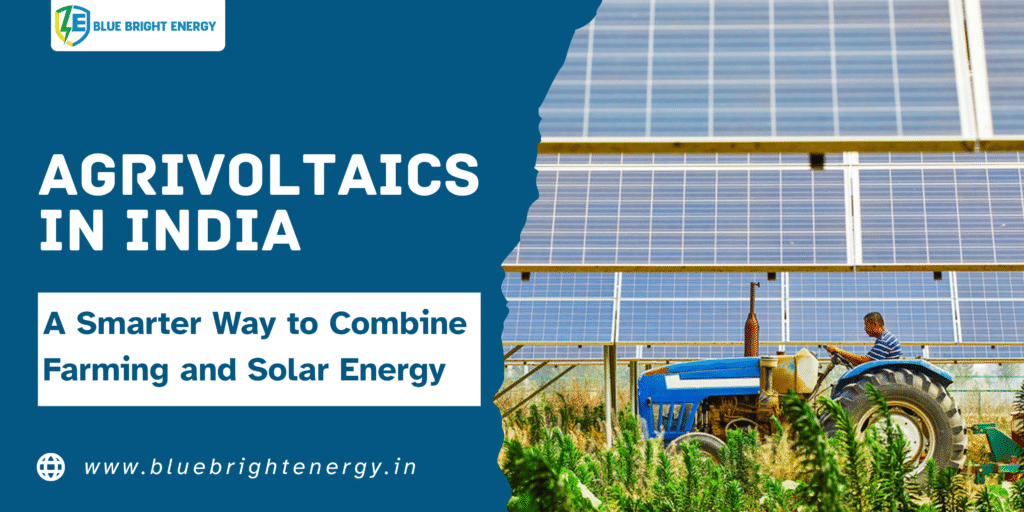
Agriculture and energy are two things India depends on heavily. What if both could work together on the same land? That’s exactly what agrivoltaics offers.
This approach is gaining attention across India, especially in states like Tamil Nadu, where sunlight is abundant and farming is a major livelihood. By combining solar energy solutions Tamil Nadu with agriculture, agrivoltaics creates a practical way to increase income while supporting clean energy goals.
Let’s break it down in a simple way.
What is Agrivoltaics?
Agrivoltaics is the practice of using the same land for both farming and solar power generation. In this setup, solar panels for agriculture are installed above crops or grazing areas.
This allows farmers to:
- Grow crops
- Generate electricity
- Use land more efficiently
Instead of choosing between farming or solar, agrivoltaics makes both possible at the same time.
Why Agrivoltaics is Gaining Attention in India
India has over 60% of its land used for agriculture. At the same time, the country is targeting 500 GW of renewable energy capacity by 2030.
Here’s where agrivoltaics becomes powerful:
- Just 1% of farmland can generate up to 630 GW of solar power
- Farmers can earn from both crops and electricity
- It reduces pressure on land use
This is why solar energy solutions in India are now moving toward dual-use models like agrivoltaics.
Key Benefits of Agrivoltaics Farming
Better Land Utilization
Agrivoltaics can increase land productivity by up to 186%, combining food and energy production.
Improved Crop Growth
Partial shade from panels helps:
- Reduce heat stress
- Maintain soil moisture
- Improve yields for certain crops
Extra Income for Farmers
Farmers can:
- Save on electricity bills
- Sell excess power to the grid
- Earn steady additional income
Lower Water Usage
Shaded soil reduces evaporation, making it ideal for dry regions.
Supports Clean Energy Goals
Agrivoltaics contributes to reducing carbon emissions while supporting sustainable farming.
How Agrivoltaics Works
The concept is simple.
- Elevated solar panels are installed above farmland
- Sunlight still reaches crops below
- Panels generate electricity simultaneously
This setup allows:
- Farming equipment to move easily
- Crops to grow in a controlled microclimate
- Farms to produce their own power
It’s a practical example of rooftop solar installation Tamil Nadu evolving into ground-based agricultural solutions.
Common Applications of Agrivoltaics
Agrivoltaics is not limited to one type of farming. It can be used in multiple ways:
- Solar panels above crops
- Greenhouses with solar roofs
- Livestock grazing under panels
- Solar-powered irrigation systems
- Water pumping and storage
These applications make solar energy solutions Tamil Nadu more versatile and impactful.
Types of Agrivoltaic Systems
Different setups are used based on land and crop type:
- Elevated solar panel structures
- Panels placed between crop rows
- Solar-integrated greenhouses
- Floating solar systems on water bodies
- Solar grazing systems for livestock
Each system is designed to balance farming and energy production.
Growth of Agrivoltaics in India
Agrivoltaics is still in its early stage in India, but it’s growing steadily.
- Around 20+ pilot projects are already active
- States like Gujarat and Maharashtra are leading
- Government schemes like PM-KUSUM are supporting adoption
With the right policies, agrivoltaics could become a major part of India’s renewable energy strategy.
Challenges to Consider
Like any emerging technology, agrivoltaics has some challenges:
- Higher initial investment compared to traditional solar
- Crop performance varies based on design
- Limited awareness among farmers
- Policy and approval complexity
However, with better solar EPC services Tamil Nadu, these challenges can be managed effectively.
Government Support and Schemes
India is actively promoting solar in agriculture through:
- PM-KUSUM Scheme – supports solar pumps and grid-connected systems
- State-level solar farming programs
- Incentives for renewable energy adoption
These initiatives are making solar panels in Tamil Nadu more accessible for farmers.
Real-World Agrivoltaics Projects
Several projects across India show how effective this model can be:
- Farms generating thousands of units of electricity daily
- Crop yield improvements in dry regions
- Solar-powered irrigation systems supporting multiple crops
These examples prove that agrivoltaics is not just an idea—it’s already working.
Role of Solar Farm Solutions in Agrivoltaics
While agrivoltaics focuses on combining farming and solar, it is built on the same foundation as solar farm development.
Solar farm solutions provide:
- Land assessment and planning
- System design and engineering
- Panel installation and grid integration
These capabilities can be adapted to create agrivoltaic systems that balance crop growth with energy generation.
In simple terms, solar farm expertise makes agrivoltaics scalable and practical.
Final Thoughts
Agrivoltaics is a smart step forward for India. It solves two major challenges at once—energy demand and land use.
For farmers, it means better income and stability. For the country, it means faster progress toward clean energy goals.
As awareness grows, agrivoltaics could become a key part of solar savings guide strategies across rural and semi-urban regions.
Ready to Explore Agrivoltaics and Solar Solutions?
If you’re planning to adopt solar energy solutions Tamil Nadu or explore advanced systems like agrivoltaics, working with the right partner makes all the difference.
Blue Bright Energy offers expert solar EPC services Tamil Nadu, helping you choose the right system, understand costs, and maximize long-term savings.
Get in touch with Blue Bright Energy today to build a smarter, more sustainable energy future.